



The Engagement Drop Is Not Random
Most founders experience a LinkedIn engagement plateau at some point. You start posting, get initial traction, and then things go quiet. It feels personal, but it is almost always structural. Something changed in your approach, in the algorithm, or in your audience's expectations, and your content did not adapt.
Understanding why engagement drops is the first step to fixing it. And the fix is rarely about posting more or trying harder. It is about posting smarter.
Reason 1: You Stopped Being Consistent
This is the most common reason by far. You posted three times a week for a month, got results, then life got in the way. A product launch, a funding round, a holiday. You missed a week. Then two. When you came back, the algorithm had moved on.
LinkedIn rewards consistency above almost everything else. The algorithm learns your posting pattern and builds distribution expectations around it. When you break the pattern, it takes time to rebuild that trust. Think of it like a muscle. Stop training and you lose the gains fast.
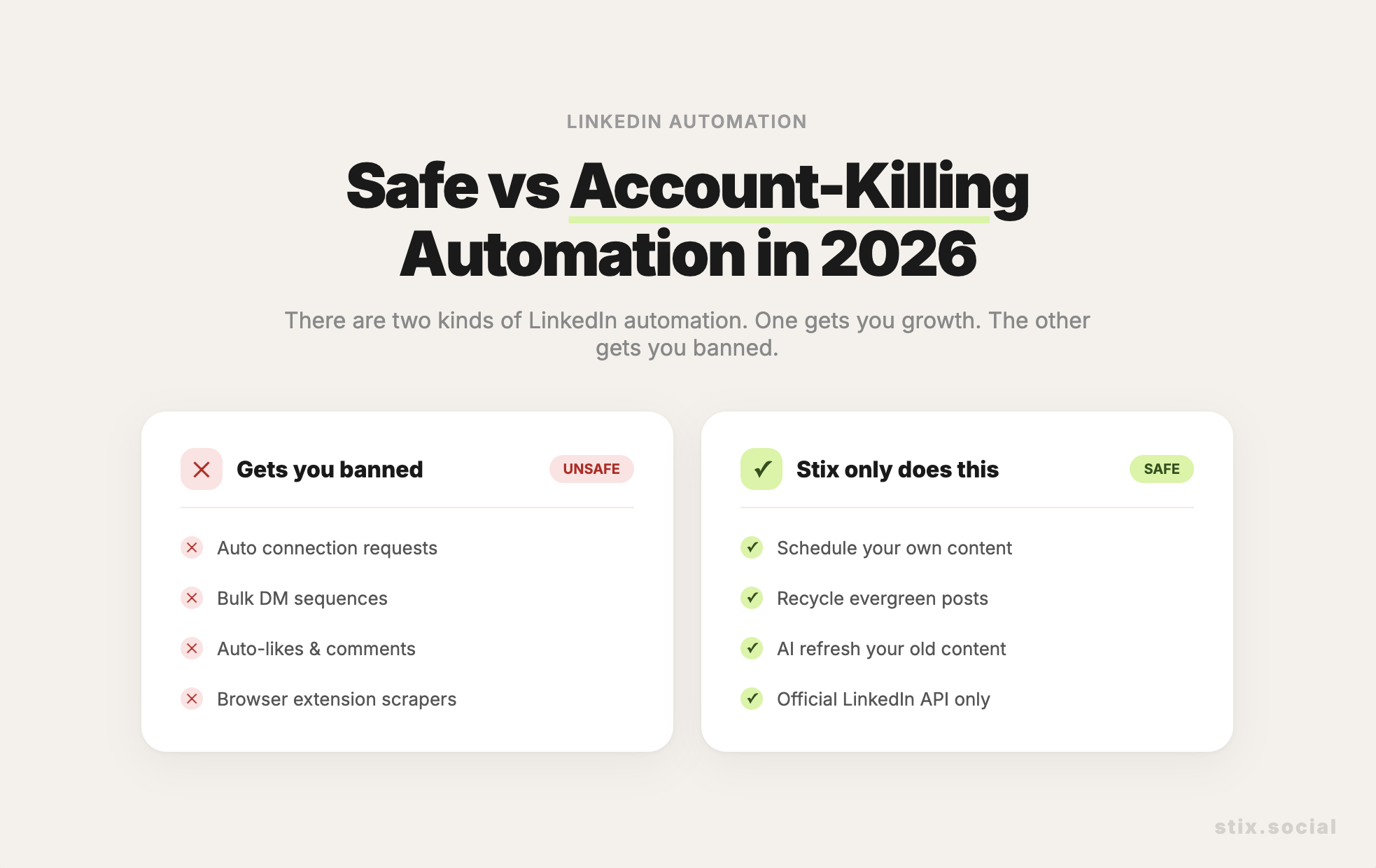
The fix is not about willpower. It is about building a system that posts for you even when you are busy. Tools like Stix let you load a content library and schedule weeks of posts in advance, so your LinkedIn presence stays alive even during your busiest stretches.
Reason 2: Your Content Got Repetitive
If every post follows the same format, tells the same type of story, or hits the same talking points, your audience tunes out. They scroll past because they feel like they already know what you are going to say.
Variety matters more than most founders realize. Mix formats between text posts, carousels, lists, and personal stories. Alternate between teaching, sharing opinions, asking questions, and telling stories from the trenches. If you have been leaning heavily on hot takes, try a tactical how-to. If you have been doing nothing but educational threads, share something personal.
Reason 3: You Are Writing for the Algorithm, Not for People
Engagement bait worked in 2023. The agree-or-disagree polls, the vague one-liners designed to get reactions, the forced controversy. LinkedIn's algorithm has gotten significantly better at identifying low-quality engagement farming and deprioritizing it.
In 2026, the posts that perform best are the ones that spark genuine conversation. That means writing from experience, sharing specific details, and giving people something to actually respond to. Instead of ending with Thoughts? try ending with a specific question that invites a real answer.
Reason 4: You Are Posting at the Wrong Time (for Your Audience)
Generic best-time-to-post advice tells you to post Tuesday through Thursday between 8 and 10 AM. But if your audience is in a different time zone, or if they are night-owl founders who scroll at midnight, that advice is useless.
Pay attention to when your best-performing posts went live. Look at your LinkedIn analytics and find the pattern. Your ideal posting window is unique to your network, not something you can copy from a blog post.
Reason 5: Your Profile Is Working Against You
People see your post in the feed, find it interesting, click through to your profile, and then bounce. If your headline is generic, your about section is empty, or your profile photo looks like it was taken in 2015, you are losing potential followers and engagement before they even start.
A strong profile acts as a conversion mechanism. When someone lands on it, they should immediately understand what you do, who you help, and why they should follow you. Think of your headline as a billboard, not a job title.
Reason 6: You Stopped Engaging with Others
LinkedIn is a social network. The social part matters. If you are only posting but never commenting on other people's content, you are missing half the equation. Engaging with others puts your name in front of their audience, builds relationships, and signals to the algorithm that you are an active participant, not just a broadcaster.
Spend 10 to 15 minutes before or after each post commenting thoughtfully on 5 to 10 posts from people in your network. Not generic comments like Great post! but actual value-adding responses that show you read and thought about their content.
The Fix: Build a System, Not a Habit
The common thread across all these reasons is that engagement drops when your system breaks down. Relying on motivation and memory is a losing strategy for busy founders.
The founders who maintain consistent LinkedIn engagement are not the ones with the most free time. They are the ones with the best systems. They batch-create content, schedule it in advance, recycle their best-performing posts, and keep their profile optimized.
If your LinkedIn engagement has dropped and you want to fix it without adding hours to your week, Stix was built for exactly this problem. Load your content, set your schedule, and let the system handle the consistency while you focus on running your business.