



Why LinkedIn Automation Has a Bad Reputation
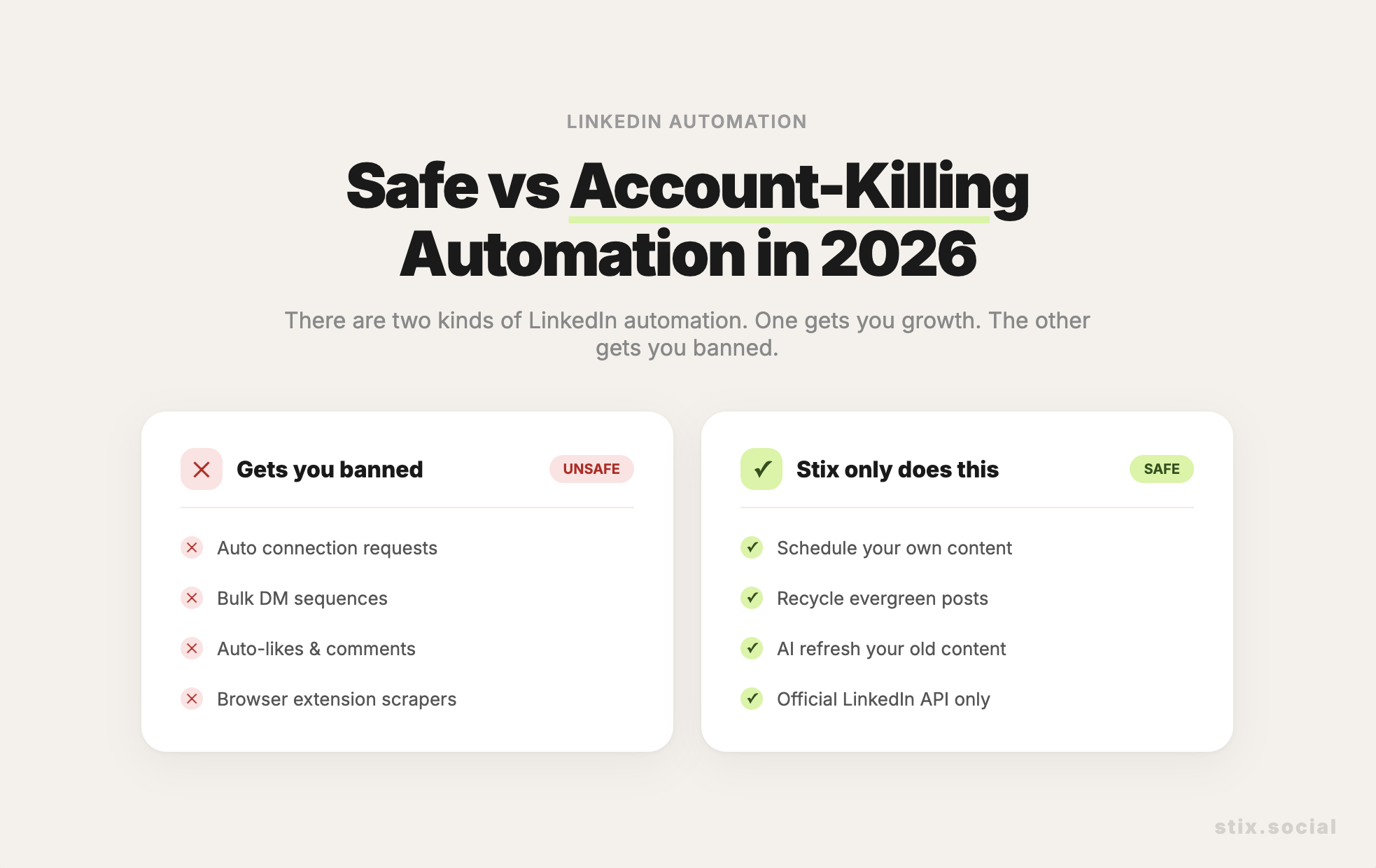
LinkedIn has taken aggressive action against certain types of automation over the years. Accounts sending hundreds of automated connection requests per day, mass-messaging strangers with templated sales pitches, or using bots to fake engagement have been banned or restricted. This crackdown was necessary and deserved. Those tactics damaged the platform experience for everyone.
But the backlash created a misconception: that all LinkedIn automation is dangerous. This is not true. LinkedIn itself runs on automation. Its own notification system, content recommendations, and job suggestions are all automated. The distinction is not automation versus no automation. It is legitimate automation versus prohibited automation.
What LinkedIn Actually Prohibits
LinkedIn's User Agreement and Professional Community Policies are explicit about what is not allowed. The key prohibited behaviors fall into three categories.
The first is connection automation. Sending automated connection requests at scale is explicitly prohibited. LinkedIn monitors connection request velocity and flags accounts that send requests far above normal human behavior. Accounts using tools like Expandi, Dux-Soup, or similar outreach bots for mass connection campaigns face restriction or permanent ban.
The second is messaging automation. Sending automated direct messages to your connections or prospects, especially at scale or using scraping tools to source contact data, violates LinkedIn's terms. LinkedIn's algorithm is increasingly good at detecting templated mass messages and will restrict accounts that engage in this behavior.
The third is fake engagement. Using bots or paid services to artificially inflate your likes, comments, shares, or follower counts violates LinkedIn's policies and is detectable. Accounts caught buying engagement face content suppression and account restrictions.
What LinkedIn Does Not Prohibit
Here is where most founders get confused. LinkedIn explicitly permits and even encourages the use of third-party tools for content scheduling and publishing. From LinkedIn's own terms: developers may build applications that allow members to schedule, manage, and publish content on their behalf, provided those applications use LinkedIn's official API.
Content scheduling and publishing automation is entirely safe when it operates through LinkedIn's official Marketing Developer Platform API. Tools that post content on your behalf using this approved API are not violating any LinkedIn policy. They are doing exactly what LinkedIn built the API for.
This means automating when your posts go live is safe. Automating the rotation of your content library is safe. Using AI to rewrite and refresh your posts before they publish is safe. Building a queue of evergreen content that publishes automatically on a schedule is safe. All of these capabilities operate through the official API with LinkedIn's full knowledge and permission.
The Two Categories of LinkedIn Automation Tools
Understanding the difference between these two types of tools is essential for protecting your account.
Outreach automation tools like Expandi, HeyReach, Dux-Soup, and similar products automate connection requests, follow-ups, and direct messages. They work by simulating browser activity or scraping LinkedIn data. These tools operate in a grey or prohibited area of LinkedIn's terms. Using them carries real risk of account restriction, especially as LinkedIn's detection capabilities improve. These tools may deliver short-term results but create long-term account vulnerability.
Content automation tools like Stix, Buffer, and Hootsuite use LinkedIn's official API to publish content on your behalf. They are fully within LinkedIn's terms. LinkedIn knows these tools exist, built the API that powers them, and actively supports the developer ecosystem around them. Using a content automation tool does not put your account at any risk.
The Safest LinkedIn Automation Setup in 2026
If you want to automate your LinkedIn presence without any account risk, follow these principles.
Only use tools that connect through LinkedIn's official API. Before using any LinkedIn tool, check whether it uses the official Marketing Developer Platform API. If a tool works by simulating browser behavior, using Chrome extensions that inject scripts into LinkedIn, or operating outside the official API, it is operating in prohibited territory.
Never automate connection requests or direct messages. These are the highest-risk automation behaviors. Handle all outreach and relationship-building manually. Automation should be reserved for content publishing only.
Keep your posting velocity human. Even with a scheduling tool, do not post so frequently that your behavior looks non-human. Posting three to five times per week through a scheduler looks exactly like normal human behavior because it is normal human behavior, just handled by a tool. Posting 20 times per day would raise flags.
Maintain human approval before publishing. The safest approach is a human-in-the-loop model where automation handles the scheduling and preparation but a human reviews and approves each post before it goes live. This ensures that nothing goes out under your name that you have not seen. It also means that if news breaks or the timing of a post becomes inappropriate, you catch it before it publishes.
Why Stix Is Built for Safe Automation
Stix was designed from day one to operate entirely within LinkedIn's official API. It does not touch connection requests, direct messages, or engagement automation. It does exactly what LinkedIn's API was built for: helping you schedule and publish content on a reliable, consistent basis.
The human-in-the-loop philosophy means that Stix handles the heavy lifting of content rotation, AI refreshing, and scheduling, but you review and approve the final schedule before anything posts. This gives you the speed of automation with the safety of human oversight.
If you are looking for a LinkedIn automation tool that will not put your account at risk, the answer is to use tools that automate content, not outreach. Build your library. Set your schedule. Stay visible. And leave the dangerous grey-area tools to founders who do not value their LinkedIn reputation.
Key Takeaways
LinkedIn prohibits automated connection requests, automated direct messages, and fake engagement. LinkedIn explicitly permits content scheduling and publishing automation through its official API. Outreach automation tools carry real account risk. Content automation tools that use the official API carry no account risk. The safest setup in 2026 is a content automation tool with human-in-the-loop approval, used only for publishing, never for outreach. Stix operates entirely through LinkedIn's official API and focuses exclusively on content, making it one of the safest LinkedIn automation tools available.