



The Algorithm Is Not Your Enemy
The LinkedIn algorithm gets blamed for everything. Your post flopped? The algorithm buried it. Your reach dropped? The algorithm changed. A competitor went viral? The algorithm must like them more.
But the truth is simpler and more empowering: the LinkedIn algorithm is a machine designed to show people content they will engage with. If you understand what it treats as a positive engagement signal, you can work with it instead of against it.
What the LinkedIn Algorithm Actually Rewards
1. Dwell Time
LinkedIn does not just count likes. It tracks how long someone stops scrolling on your post. A post that people pause to read for 15 seconds is ranked higher than one that gets a quick like and a scroll-past. Posts with line breaks, short paragraphs, and a compelling first line keep people on the page longer. Write for the reader scrolling on a phone and make it easy to start and impossible to stop.
2. Meaningful Comments Over Passive Likes
Not all engagement is weighted equally. LinkedIn assigns higher value to comments than to simple reactions. A post with 8 thoughtful comments will consistently outperform a post with 50 likes and no conversation. This is why asking a specific, easy-to-answer question at the end of your post dramatically outperforms a vague "thoughts?" CTA. The algorithm is watching whether your content creates real dialogue.
3. Early Engagement Velocity
The first 60 to 90 minutes after you post are critical. LinkedIn tests your content with a small initial audience of roughly 5 to 10 percent of your connections. If that group engages quickly, the algorithm expands distribution. If engagement is slow, distribution stalls. Posting when your target audience is actively on LinkedIn gives your post the best chance of catching early momentum.
4. Consistency Over Time
LinkedIn tracks posting patterns. Accounts that publish on a predictable schedule get preferential treatment over sporadic accounts. Pages that post at least once per week see 5.6 times faster follower growth. But it goes deeper: consistent accounts build algorithmic trust. When you disappear for three weeks and return, your next post starts from a lower reach baseline. The algorithm must re-establish confidence in your account before expanding your reach again.
5. Saves and Shares
Saves are one of the strongest signals the algorithm receives. They tell LinkedIn your content was valuable enough for someone to want to return to it. Content that earns saves tends to be highly practical: frameworks, checklists, step-by-step guides, and data-backed insights. If someone thinks "I want to remember this," you have created a save-worthy post.
What the LinkedIn Algorithm Does Not Care About
Hashtags
LinkedIn hashtags were highly influential a few years ago. In 2026, their impact has diminished significantly. Using three to five relevant hashtags is still considered best practice, but adding 20 hashtags does nothing. Focus on relevance over volume.
Posting Every Single Day
More is not always better. Three high-quality posts per week, every week, will always outperform daily posts that decline in quality after week two. Set a rhythm you can maintain for 12 months, not 12 days.
Follower Count
You do not need a large following before the algorithm works in your favor. LinkedIn surfaces content based on engagement quality and relevance, not follower count. A 500-connection account with a highly engaged audience can reach more people than a 50,000-connection account whose followers ignore their posts.
The One Thing That Changes Everything
If you could change one thing about your LinkedIn strategy in 2026, make it this: stop treating LinkedIn as a broadcast channel and start treating it as a conversation platform. Every signal the algorithm rewards is a proxy for one question: did your content create a real human reaction?
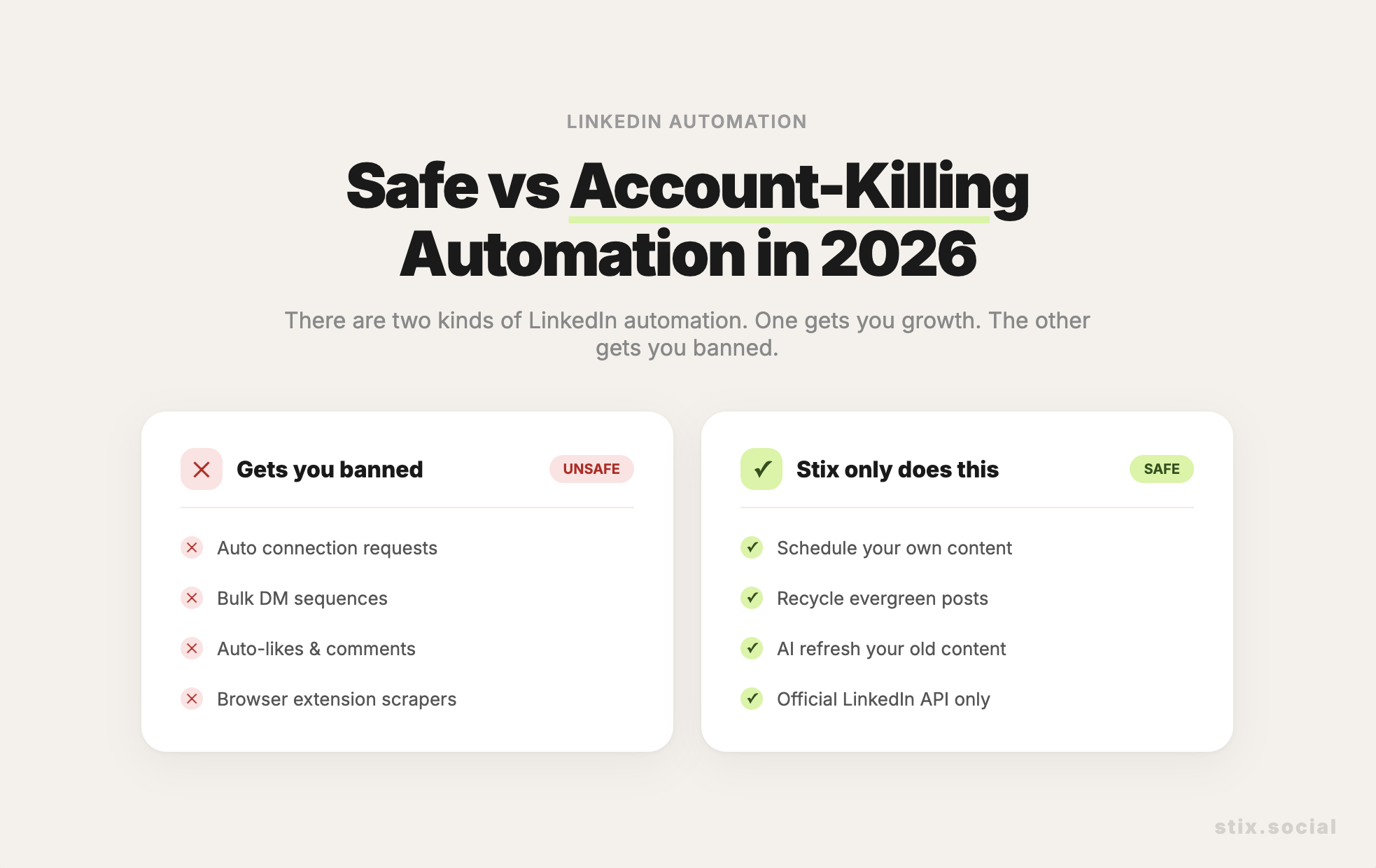
The best LinkedIn strategy is not a hacking strategy. It is a quality-and-consistency strategy. Show up reliably. Write for real people. Start real conversations. The algorithm will do the rest. If staying consistent is your challenge, Stix is built to solve exactly that. A content library that rotates your best posts, refreshes them with AI, and keeps your feed active even during your busiest weeks means you never have to choose between running your business and staying visible.
Key Takeaways
The LinkedIn algorithm rewards dwell time, meaningful comments, early engagement velocity, consistency, and saves. It does not significantly reward hashtag volume, daily posting frequency, or large follower counts. Early engagement in the first 60 to 90 minutes determines how widely your post is distributed. Consistency builds algorithmic trust over time and going quiet resets your reach baseline. The most effective LinkedIn strategy is quality content on a reliable schedule, not algorithm hacking.