



Why Your Best LinkedIn Content Dies in 24 Hours—and the "Evergreen" Strategy to Fix It
You spend two hours crafting the perfect LinkedIn post. You polish the hook, select the perfect image, and hit "Post." For 24 hours, the likes and comments roll in. Then—total silence. By day three, that valuable insight is buried under a mountain of algorithm noise, never to be seen again.
For founders and lean marketing teams, this is the "Content Treadmill." It’s a cycle of constant creation that leads to burnout, inconsistent presence, and diminishing returns. But what if your best ideas didn’t have an expiration date? At Stix, we believe valuable content shouldn’t die after one post.
The Problem: The High Cost of Content Decay
Most B2B brands treat LinkedIn like a daily news cycle. They operate under the myth that once a post is shared, it is "used up." This mindset is expensive for three reasons:
- Low Visibility: On average, only a small fraction of your followers see any single post. If you only post it once, 90% of your audience missed it.
- Resource Drain: Creating high-quality, original content from scratch every day is unsustainable for small teams.
- The "Quality vs. Quantity" Trap: When you’re forced to post something every day, the quality inevitably drops.
The Solution: Building an "Evergreen Engine"
Evergreen content is information that remains relevant and valuable long after its publication date. Transitioning from a "daily calendar" to an "evergreen library" shifts your social media from an expense to an asset.
1. Identify Your "Gold" Posts
Not every post deserves to be evergreen. Your "Gold" posts are those that:
- Answer a frequently asked question from clients.
- Challenge a common industry myth.
- Share a foundational brand value or founder story.
- Provided a high "Save" or "Share" rate in the past.
2. Categorize by Content Pillars
Instead of a random stream of consciousness, organize your library into 3-5 distinct categories. For a SaaS founder, these might be:
- Authority/Insight: Deep dives into industry trends.
- Product/Problem: How your tool solves specific pain points.
- Personal/Culture: The "behind-the-scenes" of building the company.
3. The Art of the "Refresh" (Not Just Reposting)
The biggest fear people have with evergreen content is looking repetitive. This is where the strategy evolves. You shouldn't just repost the exact same text. You should vary the entry point.
- Change the Hook: Use a different opening line to grab a different segment of your audience.
- Switch the Format: Turn a text post into a listicle, or a short insight into a longer "deep dive."
- The Stix Way: Using AI to generate these variations ensures the core value remains, but the presentation feels fresh to your audience.
Why "Human-in-the-Loop" is Non-Negotiable
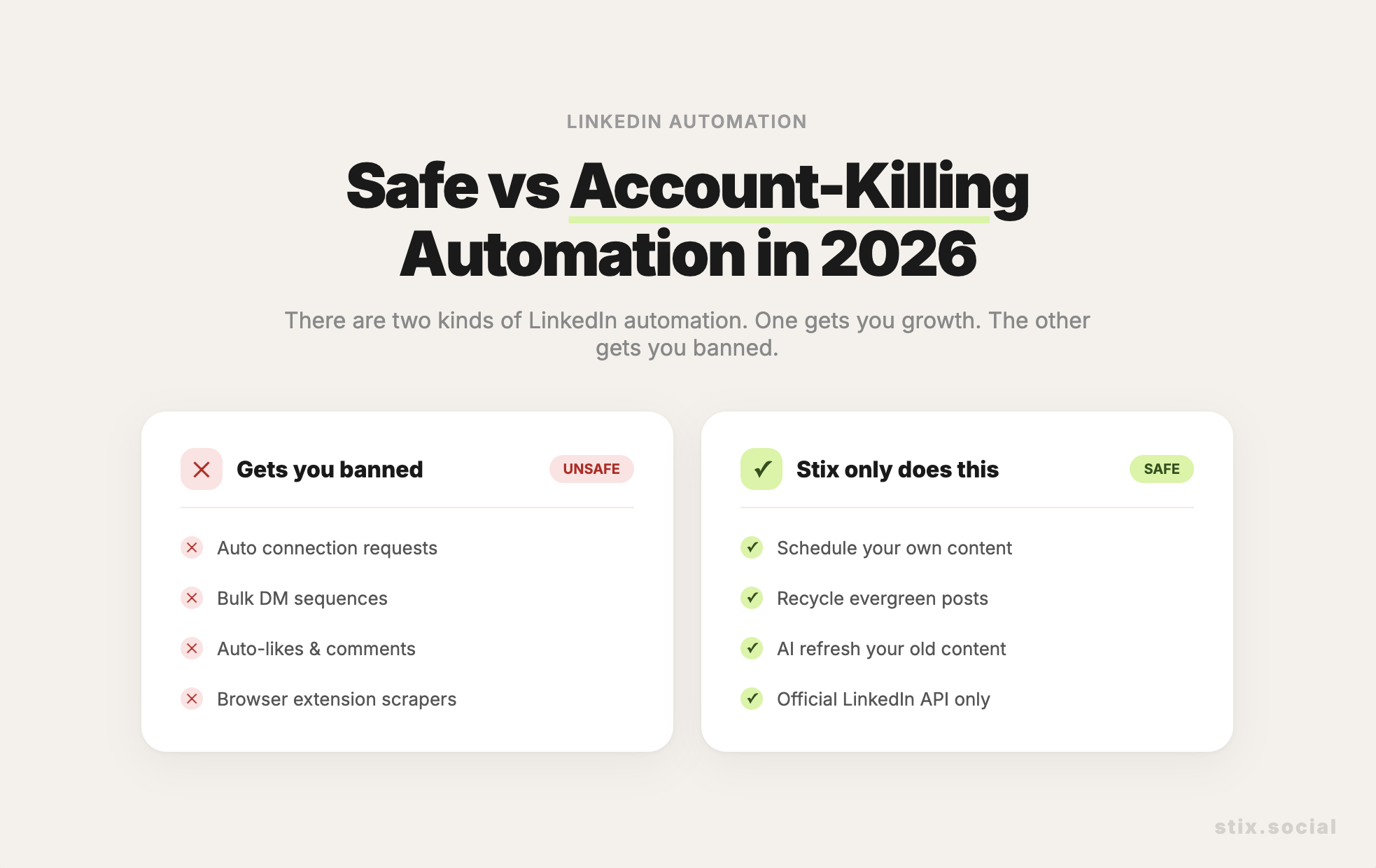
Pure automation is the enemy of engagement. LinkedIn users can smell "bot behavior" from a mile away. To maintain a high-trust brand (E-E-A-T), you need a system where AI suggests the refresh, but a human provides the final "okay." This ensures your unique voice, tone, and nuance are never lost in the shuffle.
Summary: Content Compounding vs. Content Decay
FeatureThe Content TreadmillThe Evergreen EngineEffortHigh (constant creation)Low (strategic refreshing)ReachSingle spike, then zeroCompounding over timeQualityDiluted by volumeConsistently highROIShort-termLong-term brand equity
Conclusion: Escape the Treadmill
Stop letting your best ideas disappear. By treating your LinkedIn feed as a rotating gallery of your best insights, you build consistency without the constant pressure of a blank page. You’ve already done the hard work of thinking; now let your content work for you.