


The Viral Post Myth
A viral LinkedIn post feels incredible. You wake up to thousands of impressions, hundreds of likes, and a flood of connection requests. For a day or two, you feel like a thought leader. Then it fades. Within 72 hours, your post is buried. Your impressions drop back to baseline. Your inbox goes quiet.
This is the problem with building a LinkedIn strategy around virality. Viral posts are unpredictable, unrepeatable, and temporary. They create a spike in visibility that disappears almost as fast as it arrives. For B2B founders who need a steady pipeline of awareness and trust, spikes are not a strategy.
How the LinkedIn Algorithm Rewards Consistency
LinkedIn's algorithm works on a trust system. It evaluates how reliably you show up, how your audience engages with your content over time, and whether your posts generate meaningful interactions like comments, saves, and shares.
When you post consistently, three things happen at the algorithm level. First, LinkedIn begins showing your content to a larger percentage of your first-degree connections. Accounts that post regularly get prioritized over accounts that post sporadically. Second, your content gets tested with second and third-degree connections more frequently. The algorithm gives consistent posters more distribution experiments. Third, your engagement rate stabilizes and compounds. Instead of wild swings between high and zero, you build a steady baseline that grows month over month.
Companies that post at least once per week on LinkedIn see 5.6 times faster follower growth than those that post less frequently. That growth is not driven by individual viral moments. It is driven by the compounding effect of steady visibility.
The Math Behind Compounding
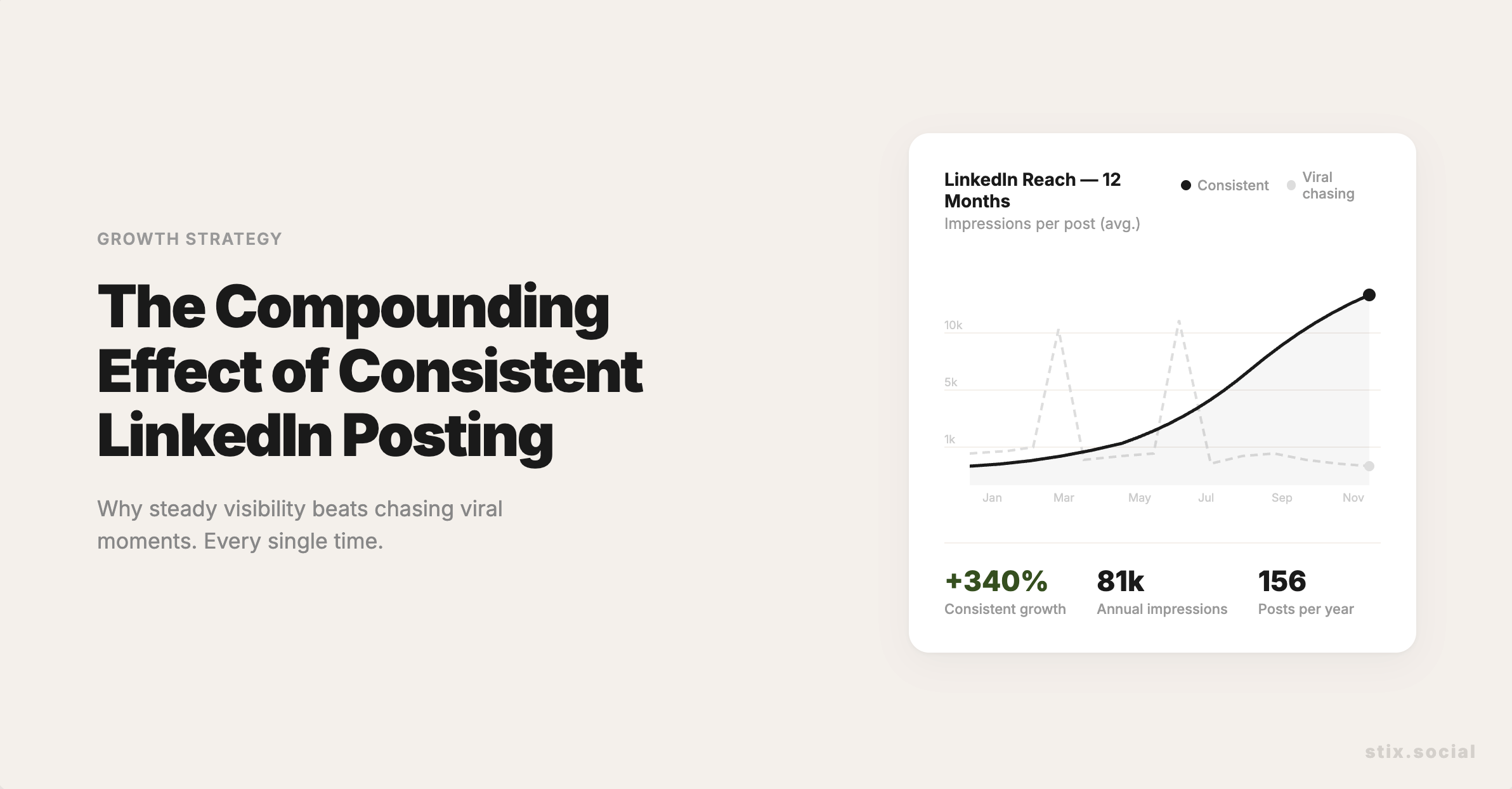
Consider two LinkedIn strategies over 12 months.
Strategy A focuses on virality. You post occasionally, maybe twice per month, hoping each post breaks through. One post does go viral and reaches 50,000 people. The other 23 posts average 500 impressions each. Total reach for the year: approximately 61,500 impressions.
Strategy B focuses on consistency. You post three times per week, every week, for 52 weeks. That is 156 posts. Your average impressions start at 400 per post but grow by 5 percent per month as the algorithm rewards your consistency. By month 12, your average post reaches 650 people. Total reach for the year: approximately 81,000 impressions, with a steadily growing baseline.
Strategy B wins not because of any single breakout post, but because the compounding effect of consistent visibility accumulates more total reach, more connections, and more trust over time. And unlike the viral strategy, the consistent strategy ends the year with a higher baseline than it started. You are not starting from zero every month.
Trust Is Built Through Repetition, Not Spectacle
In B2B, buying decisions are not made in a single moment. They are made over weeks and months of accumulated trust. A potential client sees your post about a common industry problem. Two weeks later, they see your take on a related trend. A month later, they see a case study from one of your customers. By the time they need a solution, your name is already in their consideration set.
This process does not work with sporadic posting. If your LinkedIn feed has three posts in January and then nothing until April, you are invisible during the exact months your potential clients might be researching solutions. Consistency ensures you are always present when opportunity arises.
Why Most People Fail at Consistency
The challenge is not that founders do not understand the value of consistent posting. The challenge is that consistency requires a system, and most people rely on willpower instead.
Willpower-based posting looks like this: you decide to post three times this week. You write one post on Monday. By Wednesday, a client emergency pulls your attention. Friday passes. Next week, the same pattern repeats. Within a month, you have posted four times instead of twelve, and the inconsistency resets any algorithmic momentum you were building.
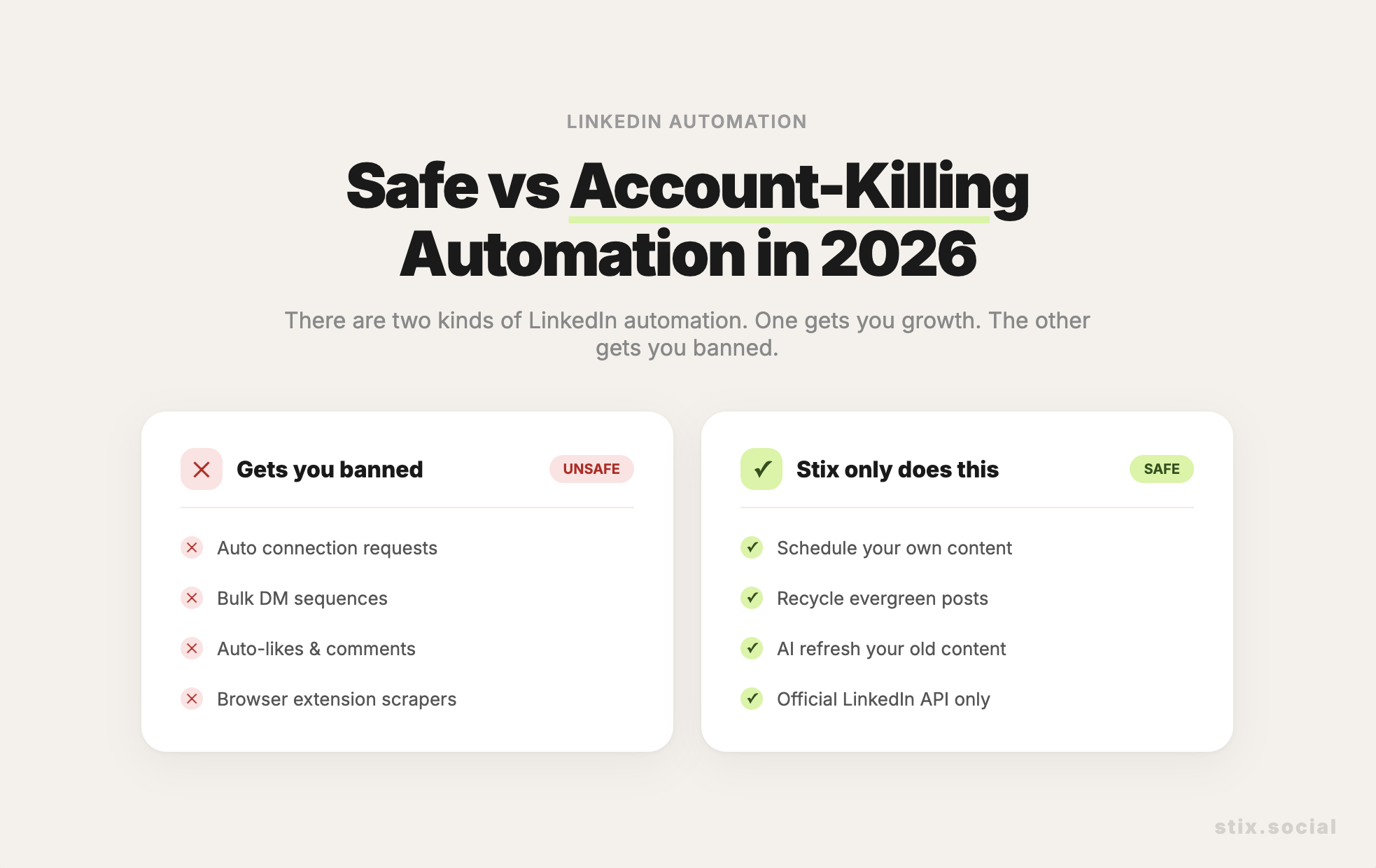
System-based posting looks different. You build a library of evergreen content. You categorize it by theme. You set a schedule that automatically pulls from your library. When you get busy, the system keeps running. When you have time to write, you add new posts to the library, making the system stronger.
Building a Compounding LinkedIn System
A compounding LinkedIn system has four components.
A content library. Start with 20 to 30 posts that cover your core topics. These do not all need to be written from scratch. Review your past posts, sales conversations, internal memos, and presentations. Extract the insights and turn them into standalone LinkedIn posts.
Content categories. Organize your library into three to five categories. For a B2B SaaS founder, this might include product insights, industry trends, lessons from building the company, customer stories, and practical tips. Assigning posts to categories ensures variety in your feed and prevents topic fatigue.
A rotation schedule. Set a posting schedule per category. Monday is for industry insights. Wednesday is for practical tips. Friday is for a customer story. The system selects the least-recently-used post from each category, ensuring nothing gets overused.
AI-powered refresh. The final ingredient is keeping recycled content fresh. An AI rewriter can take a six-month-old post and generate a new variation that preserves the core message but updates the hook, examples, or format. This prevents your feed from looking repetitive while eliminating the need to write from scratch.
Tools like Stix combine all four components into a single platform. You build your library once, set your schedule, and let the system handle the rest. The result is a LinkedIn presence that compounds over months and years instead of resetting to zero every time you get busy.
Key Takeaways
Viral posts create temporary spikes. Consistent posting creates compounding growth. LinkedIn's algorithm rewards accounts that show up reliably, giving them more distribution over time. Consistency over 12 months generates more total reach than occasional viral moments. B2B trust is built through repeated visibility, not single breakout posts. Replace willpower-based posting with a system that runs automatically using a content library, categories, rotation schedules, and AI refresh. The compounding effect means your LinkedIn presence gets stronger every month, not weaker.